"YOUR BEHAVIOUR Won't Be The Same AFTER THIS!" (Change Your Brain)| Andrew Huberman & Lewis Howes

Topics covered
Popular Clips


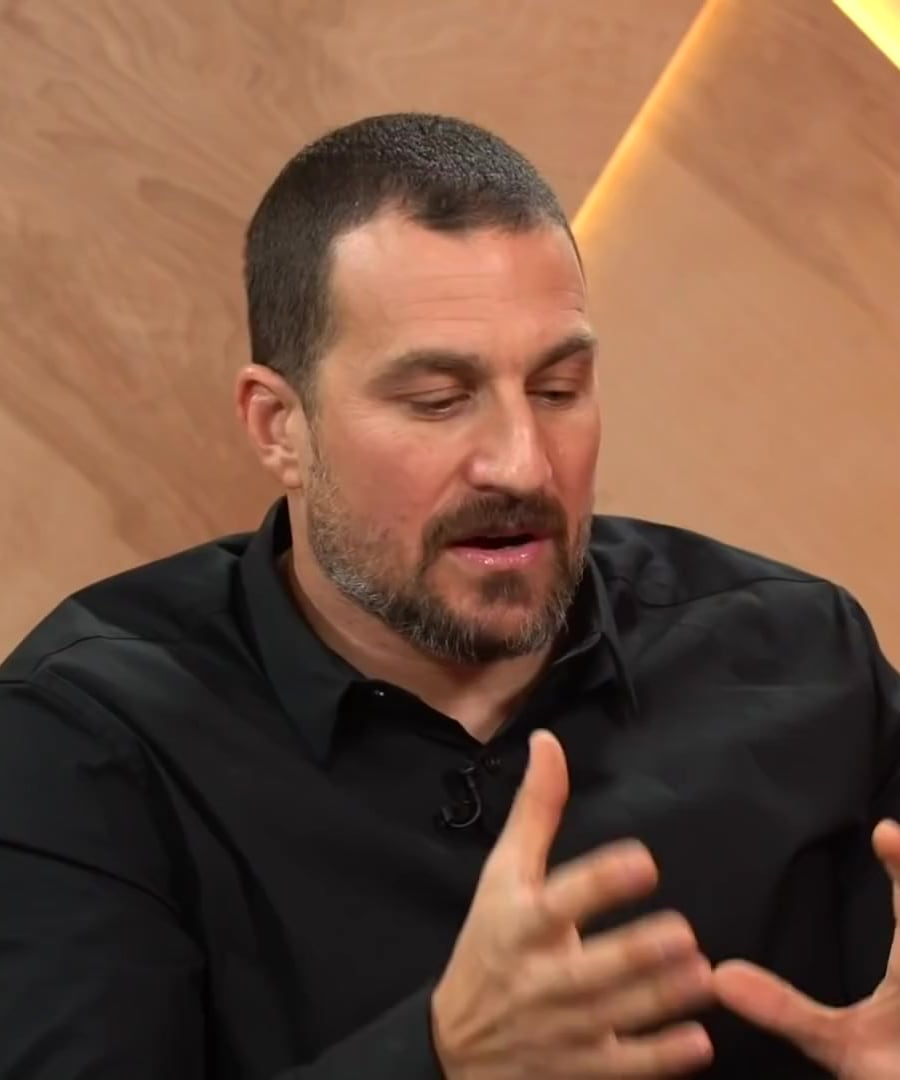




Episode Highlights
Stress Types
Understanding stress involves recognizing its two primary forms: hyper-alert stress and overwhelm stress. explains that hyper-alert stress is characterized by heightened alertness and agitation, often requiring techniques to calm the body and mind 1. Conversely, overwhelm stress occurs when individuals feel exhausted and unable to mobilize energy, necessitating activation strategies 2. Huberman emphasizes the importance of identifying the type of stress one is experiencing to apply the appropriate solutions 3.
The first thing for anyone trying to navigate stress... is to understand what kind of stress they're dealing with.
---
This understanding is crucial for effectively managing stress and preventing the transition from one type to another.
Breathing Tools
Breathing techniques offer practical tools for managing stress and altering physiological states. highlights the physiological sigh, a double inhale followed by an exhale, as an effective method to reduce hyper-alert stress 4. This technique leverages the body's natural mechanisms to calm the mind, bypassing the often ineffective approach of trying to control the mind with the mind 5. Additionally, Huberman discusses the benefits of controlled breathing patterns, such as longer inhales for increased alertness and exhale-emphasized breathing for relaxation 6.
It's very hard to control the mind with the mind. So when you're stressed, just telling yourself, don't stress, don't stress, don't stress, calm down, calm down rarely works.
---
These techniques are accessible and can be integrated into daily routines to enhance stress management.
Mind-Body Loop
The mind-body connection plays a pivotal role in stress management and relaxation. describes this relationship as a loop, where controlling one aspect can influence the other 7. He emphasizes the concept of top-down control, where the mind can regulate the body's responses, such as in situations of stress or cold exposure 8. Huberman also notes that patience and control are crucial when dealing with hyper-alert or overwhelmed states, as these conditions can distort one's perception of time and increase impatience 9.
The mind controls the body, the body controls the mind. It's a loop.
---
Understanding and leveraging this connection can lead to more effective stress management strategies.
Related Episodes


How To REWIRE Your Brain To NEVER BE LAZY Again (Try This Today) | Andrew Huberman
Answers 383 questions"This Is Why You FEEL LOST & UNHAPPY In Life" - Fix This TODAY! | Andrew Huberman
Answers 383 questions

Neuroscientists REVEAL How To HEAL Your MIND | Lewis Howes
Answers 383 questionsJohn Assaraf on Unlocking Your Brain's Full Potential with Lewis Howes
Answers 383 questions
AFTER THIS You'll Change How You DO EVERYTHING | Tony Robbins & Lewis Howes
Answers 383 questions
DO THIS To Organize Your Mind & ACHIEVE ANYTHING You Want! | Sadhguru & Lewis Howes
Answers 383 questions
The POWERFUL TIPS For Behavior & HEALTHY HABITS Shift | Lewis Howes
Answers 383 questions